
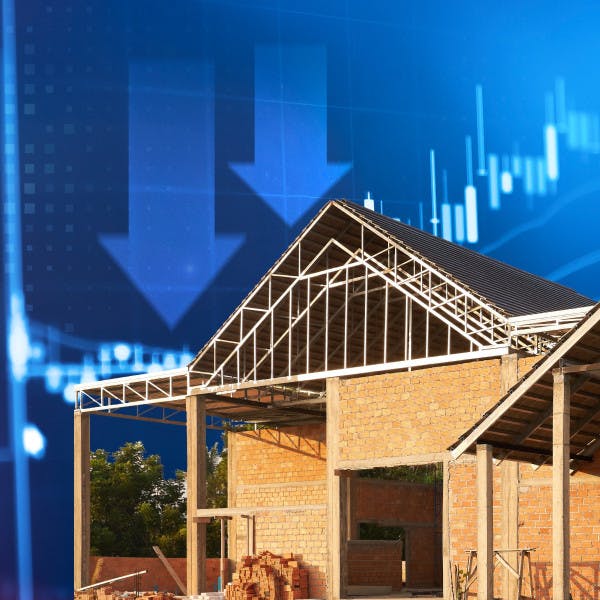
Builders turn their back on single-family homes
Housing permits, starts and completions were all down year-over-year in June as rates and material costs remain elevated, continuing a “worrying pattern.”


Once a beacon of hope in a slow real estate market, single-family home construction continues to slow heading into the second half of the year.
While overall housing construction — including multifamily properties — was up slightly in June, single-family construction sagged: Permits declined 8.4%, starts dropped 10% and completions were down 15.5%, according to data released by the U.S. Census Bureau on July 18.
The numbers have fallen significantly since December, when the year ended on a high note for home construction. The annual rate of single-family starts in 2024 was just over 1 million — the second-highest number since 2007 — while the pace in June had slowed to just 883,000.
Why has the residential construction outlook changed? Elevated interest rates, rising inventories and ongoing supply-side issues were the main factors for the slowdown, said Robert Dietz, chief economist at the National Association of Home Builders. He noted that the South region — which has been a construction hot spot — is seeing the biggest slowdown, but activity has picked up significantly in the Midwest.
In a market where existing home sales are continuing to stall, pushing inventory up, builders are reluctant to do much, said Joel Berner, senior economist at Realtor.com. Instead they "are turning to larger projects with higher margins to insulate themselves from the increased building costs due to tariffs," which have been a moving target. Import taxes on Canadian lumber, set to take effect later this summer, will also affect material costs.
Builders are 'thoroughly discouraged': "This month's new construction data continues a worrying pattern of builders seeming thoroughly discouraged by economic and political conditions," Berner said.
That pattern is reflected in declining sentiment as builders find themselves turning to price cuts to make sales, said Odeta Kushi, deputy chief economist at First American.
"Price cuts are often used as a last resort incentive, but have become increasingly necessary in today's market to offset affordability challenges," Kushi said.
When will construction pick up? Not until consumers feel more confident about the state of the economy, according to Lisa Sturtevant, chief economist at Bright MLS.
"While there is still a long-term structural housing shortfall, in the current economic climate, many individuals and families are not interested in looking for a new place to live, whether as a homeowner or a renter," Sturtevant said.