
Tariffs ‘on track to exacerbate’ US housing shortage
A new congressional report estimates that there are nearly 60K fewer home construction jobs now than before the president introduced “Liberation Day” tariffs.


It's been a year since President Donald Trump ushered in a variety of import duties against most countries through his "Liberation Day" proclamation.
While these tariffs' impacts on the homebuilding industry remain muddled, they have introduced a degree of uncertainty that is leading to fewer homes being built at a time when the nation is estimated to have a shortage of around 4 million homes.
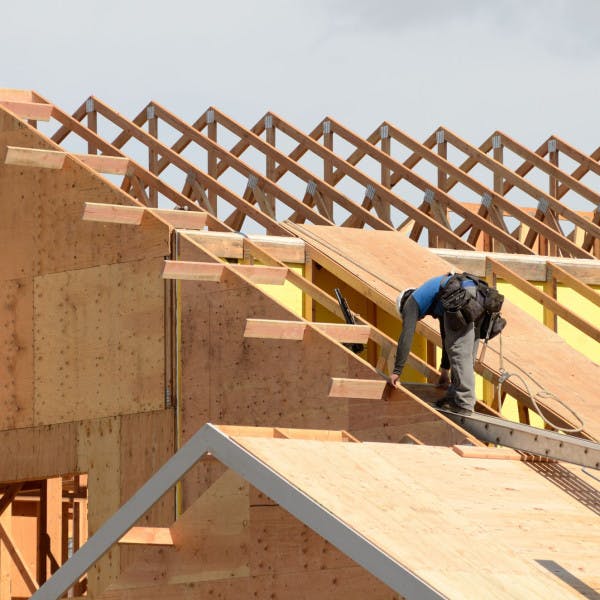
Congressional report estimates tens of thousands fewer jobs: In a new report first covered by Realtor.com, the U.S. Congress Joint Economic Committee — Minority estimates that there are nearly 60,000 fewer home construction jobs now compared to December 2024, a month before Trump's second term as president began.
The report released by Democrats focused on payroll employment of residential building construction workers and specialty trade contractors, who account for around 3.3 million workers. The reported job losses over the past year represent a drop of less than 2%.
Rising costs due to tariffs were cited as a primary factor for this decline. As of February, prices of key materials — like copper and steel — had climbed more than 20% compared to a year earlier. The prices of home improvement items have also risen faster than the overall consumer inflation rate, with the report estimating that the price of popular oven brands was up 9% in March compared to last summer while the price of furniture in February was up 4.4% year-over-year.
Elevated prices aren't helping address the country's persistent housing deficit, the report noted. "Experts across the political spectrum have pointed to the U.S. nationwide housing shortage as a primary driver of higher prices to rent and buy homes. Tariffs are on track to exacerbate this crisis," it said.
Other data conflicts with JEC report: However, data from the National Association of Home Builders (NAHB) reflects a less dramatic trend than what the congressional report indicates.
While the NAHB has noted a net loss of 29,300 jobs in residential construction, the association also found 202,000 open jobs. While down from the peak of more than 500,000 unfilled positions in 2022, the number of current job openings remains elevated when compared to the first 15 years of this century.
The 'larger effect' of tariffs: What is becoming clear is the caution home builders are exhibiting during this period of economic volatility. "Uncertainty has been the larger effect with respect to tariffs," NAHB Chief Economist Robert Dietz said in an email to Real Estate News.
This uncertainty is showing up in construction permits which, along with housing starts, were down significantly at the end of 2025 compared to a year before. While tariffs have contributed to this decline, so have broader economic concerns, according to Joel Berner, senior economist at Realtor.com.
"Interest rates are the biggest contributing factor for permit activity and sentiment because they affect the cost of capital on the supply side as well as buyer budgets via mortgage rates on the demand side," Berner wrote.