

Fed changes already underway as Kevin Warsh embraces top role
Though the Fed held short-term interest rates steady at its June meeting, several officials now anticipate at least one rate hike before the end of the year.

Key points:
- The Federal Open Market Committee voted June 17 to keep short-term rates at the 3.5% to 3.75% range amid rising inflation and the ongoing war in the Middle East.
- In a notable shift from early 2026, more Fed officials are now expecting a rate hike before the end of the year rather than a cut.
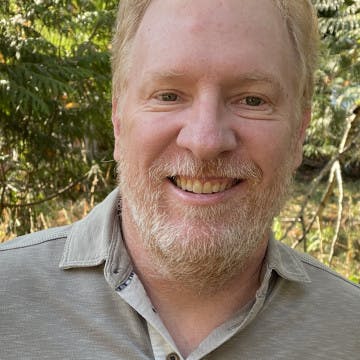
- During his first press conference as Fed chair, Kevin Warsh announced the creation of five new task forces, which he said will provide a “fresh look” at how the central bank operates.
Concern over inflation is prompting more Federal Reserve officials to consider raising short-term interest rates later this year.
On June 17, the Federal Open Market Committee (FOMC) voted unanimously to hold rates at the 3.5% to 3.75% level. The committee's latest economic projections indicate that nine of 19 officials are anticipating at least one rate hike before the end of the year.
The committee also adjusted its projections on inflation, predicting that the year will end with inflation levels around 3.6%, up from March's 2.7% projection.
The reversal over the past few months from potential rate cuts to a possible increase comes as inflation hovers around a three-year high, mostly due to sharp increases in energy and food prices amid the ongoing war in the Middle East.
While the FOMC's decision to leave rates unchanged was not surprising, investors were perhaps more interested in what Kevin Warsh, the Fed's new chair, had to say during his first press conference in the role.
Changes at the central bank on the horizon
In his public remarks on June 17, Warsh emphasized the Fed's goal for the U.S. economy to achieve price stability and maximum employment. However, he set a different tone from ex-Chair Jerome Powell by offering a much shorter committee statement and doing away with forward guidance commentary.
Warsh also announced five new task forces that he said will review how the central bank operates by assessing its communications, balance sheet, use and reliance on existing data sources, jobs and productivity, and inflation frameworks.
"These subjects are timely, consequential and, in my view, worthy of a fresh look," Warsh said.
Current rates 'somewhat restrictive' for housing
Warsh said he considers current short-term interest rates less restrictive toward the financial markets and other parts of the economy than toward housing.
"Fed policy isn't the single determinant of the state of the housing market, but broadly I would say there that Fed policy appears to be somewhat restrictive," Warsh said. "But the good news is we have a task force on that too, and the balance sheet task force will be looking more at that subject."
A push to rely on data — not Fed guidance
When asked why the Fed will not be releasing forward guidance as it did under his predecessor, Warsh said he believes financial markets perform best when they react to incoming data.
"The more that markets are paying attention to what is happening in the real economy — deciding what is good data and what is less good data — the more financial markets can price what they believe is the most likely and what are the tail risks," Warsh said. "When all the financial markets are doing is reflecting back what we've said, then we're taking the most important source of information and being blind to it."
For now, the Fed is continuing to release its "dot plot" projections. Along with its expectations for elevated inflation levels, the committee indicated it anticipates the unemployment rate will remain around the same at 4.3% and GDP will fall slightly to 2.2% by the end of 2026.
Five voting members think short-term interest rates will be in the 4%-4.25% range by the end of the year. Eight expect rates to remain in the 3.5%-3.75% range.
Trump, investors react
President Donald Trump reacted mildly to the Fed's decision to maintain current interest rates, telling reporters, "It's all right, whatever." When asked about the possibility of a future rate hike, Trump acknowledged it "could happen" but added that such a move would be "hard to believe."
Though he lobbied hard for rate cuts during Powell's term as chair, Trump reiterated his confidence in Warsh, who was sworn in just last month.
"We have a very good guy over there now, so I'm guided by what he wants to do," Trump said.
As investors digested Warsh's press conference in the final hour of trading, the stock market fell around 1%. Meanwhile, a rise in 10-year Treasury and other bond yields caused the 30-year mortgage rate to jump, with Mortgage News Daily estimating it to be at 6.62%, up from 6.54% the day before.