
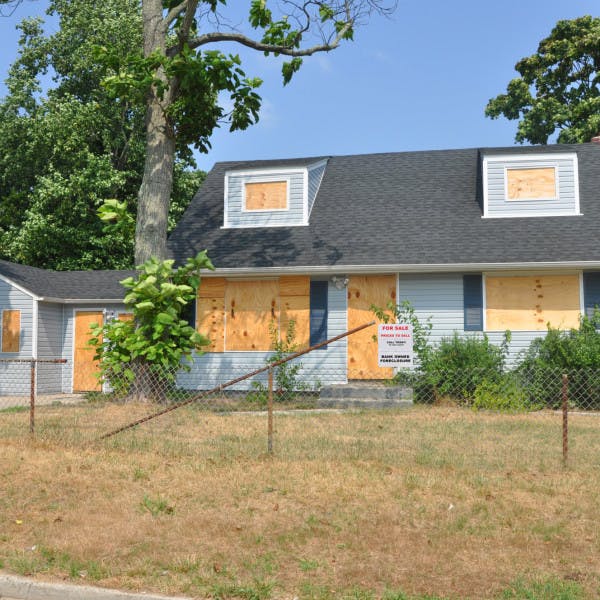
Mortgage delinquencies rise as financial squeeze hits homeowners
While many homeowners have relatively low mortgage rates, rising inflation, insurance and property taxes are eating into incomes and leading to missed payments.


Key points:
- In a recent webinar, Auction.com’s Daren Blomquist and CJ Patrick Company’s Rick Sharga discussed the current state of foreclosures and distressed sales.
- Foreclosure filings were up 13% year-over-year in August and are moving toward pre-pandemic levels. That’s still well below the Great Recession years, however.
- One emerging trend is that delinquent mortgages are being settled earlier in the foreclosure process because many homeowners have equity they want to recoup.
The number of distressed or foreclosed properties continues to creep up to pre-pandemic levels, even though one of the traditional drivers — rising unemployment — doesn't appear to be the primary cause.
Real estate agents are seeing firsthand how inflation and affordability challenges are sidelining potential buyers. Some of those same challenges are affecting existing homeowners, leading to more delinquent mortgage payments, according to Daren Blomquist, head of market economics at Auction.com.
Rising insurance premiums, property taxes are taking a toll
Among the common reasons for missed payments, "loss of income is high on the list, but not loss of job," Blomquist said during a recent webinar hosted by Verisk Property Estimating Solutions and featuring Rich Sharga, president and CEO of CJ Patrick Company.
So what's eating into homeowner incomes? Insurance premiums, which have risen 39% on average since 2022, and property taxes, which are up 31%, Blomquist noted.
"That's going up at a lot faster pace than inflation," he said, adding that those costs can make up a meaningful share of a monthly house payment. "So that is driving a lot of this distress."
Still far from peak levels after the financial crisis
As home-related costs have increased, foreclosure rates have also steadily risen from the ultra-low levels seen during the early days of the pandemic. ATTOM's most recent quarterly report logged just over 40,000 foreclosure filings for the month of August, up 13% from a year ago.
While the increase is something to keep an eye on, it doesn't signal an impending crisis, according to ATTOM. That's particularly true when comparing today's levels to the monthly foreclosure filings seen during the Great Recession, which peaked at more than 361,000 in July 2009, the report noted.
"While some homeowners are still facing financial challenges, overall foreclosure volumes remain well below historical norms and the broader housing market continues to demonstrate resilience," Rob Barber, CEO at ATTOM, said in the report.
One contributor to the rise in foreclosures over the past year is the weaker performance of government-backed loans like the FHA, Blomquist said during the webinar. He pointed to a 2025 HUD rule change that reduced mortgage recovery options, along with the Sept. 2025 expiration of Covid-era programs for borrowers, as factors that pushed delinquencies and foreclosures in the near term.
While Blomquist believes it's a short-term blip, he acknowledged that it could be symptomatic of the broader affordability problems homebuyers and homeowners are facing.
Delinquent mortgages leading to sales, not seizures
During the wave of foreclosure activity around 2008, many homeowners had negative equity, so they had little incentive to try and sell their home before the final stage of foreclosure. "That's a huge, fundamental difference between today's market and that cycle," Sharga said in an email.
Even though foreclosure rates have gone up, fewer delinquent mortgages are ending with a bank-owned status, because many of those homeowners still have significant equity, Sharga noted. Rather than risk losing that equity by allowing the home to be reclaimed by the lender, owners who are having trouble making their monthly mortgage payments may opt to sell, even if market conditions are not optimal.
Another issue prompting delinquent owners to sell involves their credit: When a homeowner misses payments and the mortgage falls into delinquency, their credit score drops dramatically and they can't qualify for a home equity loan, Sharga explained.
"They still have equity, but can't get to it," he said. "Ultimately the homeowner decides that they're better off selling the home."
On the other side of the equation, when foreclosure auctions do happen, Blomquist said more owner-occupant buyers — not just investors — are showing up in hopes of getting a good price.
"I do absolutely believe that some of these owner-occupant buyers are turning to auction because of affordability in the broader market," Blomquist said in an email.