
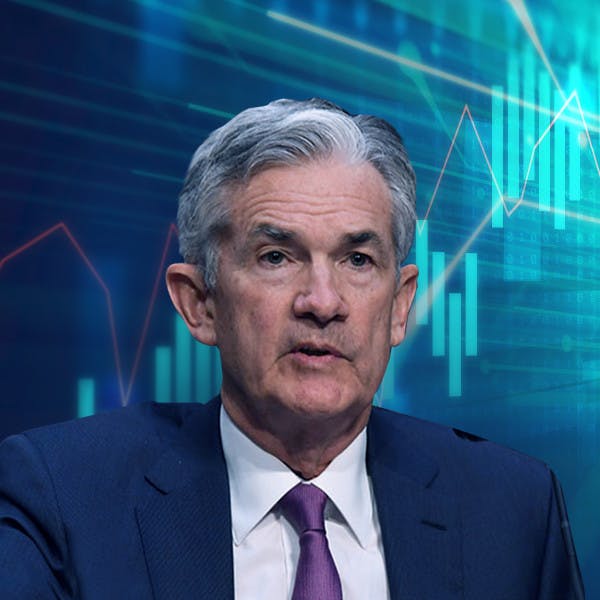
Fed keeps rates frozen as Powell prepares for leadership handoff
In what may be his final press conference as Fed chair, Jerome Powell urged support for a central bank “free of political influence.”

With Jerome Powell's announcement that he will stay on as a Federal Reserve governor — at least for now — once his term as chair ends, the central bank is expected to keep short-term interest rates at the same level until more is done to tame inflation.
Fed rate freeze holds: As was widely expected, the Federal Open Market Committee (FOMC) decided against adjusting short-term interest rates at its April 28-29 meeting, voting 8-4 to hold rates in the 3.5% to 3.75% range. The Fed has not cut rates since December 2025, voting instead to leave rates unchanged at its January and March meetings.
Of the four dissenters, the central bank said Stephen Miran preferred to lower the target range. The three others — Beth M. Hammack, Neel Kashkari and Lorie K. Logan — agreed to leave the rate unchanged but "did not support inclusion of an easing bias in the statement at this time."
What this means for mortgage rates: Mortgage rates, which hit the lowest levels in over three years in February before surging again amid the war in the Middle East, have been moving higher in recent days. Mortgage News Daily pegged the 30-year fixed-rate mortgage at 6.45% ahead of the Fed's announcement, up from 6.38% at the start of the week — and the rate bumped even higher to 6.5% after the Fed's meeting concluded.
Threats of a prolonged naval blockade on Iran are triggering a rise in oil prices, stoking more inflation fears. In the near term, geopolitics will likely be a bigger driver of mortgage rates, said Danielle Hale, chief economist at Realtor.com.
"For buyers and sellers hoping for favorable financing while making a move, a reduction in tension is likely to result in lower rates," Hale said.
Powell isn't leaving — yet: Powell announced that he will stay on as a Fed governor until he feels that the U.S. Department of Justice's investigation — about allegedly misleading statements he made to Congress over the costs of renovating the Fed's headquarters — is "well and truly over with transparency and finality."
"My decisions on these matters will continue to be guided entirely by what I believe is in the best interest of the institution and the people we serve," Powell said at what is expected to be his final press conference as Fed chair.
What the announcement means: While Powell's term as chair ends on May 15, his term as Fed governor runs through the end of January 2028.
The DOJ's widely criticized investigation, which Powell has claimed was really about the Fed's refusal to cut short-term interest rates as quickly as the president would have liked, officially closed last week. However, U.S. Attorney for the District of Columbia Jeanine Pirro has said she "will not hesitate to restart a criminal investigation should the facts warrant doing so," perhaps influencing Powell's decision to remain at the central bank.
Powell said at an April 29 press conference that while he intends to keep a low profile as a Fed governor, he is concerned about what he called "illegal attacks on the Fed, which threaten our ability to conduct monetary policy without considering political factors."
"It is so important for our economy, for the people that we serve, that they can depend on a central bank that operates that way — free of political influence," he added.
Powell's decision also temporarily denies President Donald Trump the opportunity to fill a seat on the FOMC with another potential ally.
Warsh poised to join as Powell's successor: Also on April 29, the Senate Banking Committee voted to advance Trump's Fed chair nominee, Kevin Warsh, to a full Senate vote.
Though senators on both sides of the aisle stalled the nomination amid the investigation into Powell, the DOJ's decision to drop its probe appears to have cleared Warsh's path for advancement. The Republican-controlled Senate is widely expected to grant final approval of the nomination.
If Warsh does take over as Fed chair, it may take some time before an environment better suited for rate cuts is in place, according to Melissa Cohn, regional vice president of William Raveis Mortgage.
"The incoming Fed Chair may try to influence the voting members to cut rates, but will be hard-pressed to do anything until the war in Iran is fully resolved and oil prices come back down," Cohn said.